Aloe vera tends to get put in a very specific box. Most people know it as something tied to digestive health or something you grab when your gut feels a little off. And while that reputation isn’t wrong, it barely scratches the surface of what aloe vera actually brings to the table. If you’ve ever wondered why aloe vera keeps popping up across social media there’s a reason for that and it goes beyond just one benefit.
In this blog, we’re taking a deeper look at what aloe vera can offer beyond the surface-level benefits you’ve probably already heard about. We’re getting into the full range of ways aloe can support your body, why it works so well as a daily habit, and what you may not realize you’re getting from it, when you start drinking it regularly.
What Aloe Means For Your Digestive Health
One of the most common aloe vera benefits you’ve probably heard about is digestive health support. That usually gets summed up as “aloe vera is good for your gut,” but that phrase doesn’t really explain what aloe vera is actually doing for your gut. When aloe vera is used consistently, it can help support the digestive system in ways that feel more like gentle maintenance than a quick fix.
For starters, aloe vera may help soothe irritation along the digestive tract. This is why it’s often associated with support for occasional heartburn or acid-related discomfort. Aloe vera has a naturally calming, cooling quality that can help support the stomach lining when things feel a little out of balance. You may also see aloe vera mentioned in conversations around gastritis, which refers to inflammation or irritation of the stomach lining. While aloe vera isn’t a treatment, its soothing properties may help support digestive comfort when the stomach feels irritated or sensitive.
Aloe vera is also known for containing compounds that can support regularity. Aloe latex naturally contains aloin, which has laxative properties, but this is something to approach thoughtfully. Many aloe vera drinks are processed to reduce or remove aloin, making them better suited for daily use. When aloe vera is used as part of a routine, it’s more about supporting digestion overall, helping things move comfortably and keeping your system feeling balanced.
Aloe Vera Skin and Hair Benefits (From the Inside Out)
When people think about aloe and skin, they usually picture a topical gel or something you apply after a sunburn. But aloe vera can also support skin and hair health when it’s consumed as part of your routine. To be clear, we’re not talking about rubbing aloe vera on your face here, we’re talking about drinkable aloe vera and how it may support your skin from within.
Aloe vera naturally contains vitamins A, C, and E, along with minerals that play a role in overall skin health. These nutrients are commonly associated with supporting collagen production, skin elasticity, and hydration. When your body has consistent access to these nutrients, it may help support a more balanced, resilient-looking complexion over time. Aloe’s naturally soothing properties are also why it’s often discussed in relation to calming inflammation, which can be a factor in things like breakouts, redness, or early signs of aging.
What makes aloe especially interesting is that its benefits aren’t limited to just one area. While consuming aloe vera works internally, topical aloe products, like our aloe gelly, can support the outside as well by helping soothe, hydrate, and protect the skin barrier.
Why Aloe Vera Is Linked to Immune Support
Immune support is another benefit aloe vera is commonly associated with, but that phrase can feel a little vague on its own. At a basic level, immune support is about giving your body the nutrients and compounds it needs to respond, recover, and stay balanced. Aloe vera naturally contains antioxidants and vitamins that can help support this process, especially when it’s used consistently as part of a routine.
Aloe is rich in vitamins C and E, along with antioxidant and anti-inflammatory compounds that may help the body manage oxidative stress. Oxidative stress happens when free radicals build up faster than your body can handle them, which can place strain on your immune system over time. By supporting the body’s natural defenses, aloe can play a role in helping your immune system function at its best, not by “boosting” it overnight, but by supporting it steadily.
Some of the ways aloe vera may support immune health include:
- Providing antioxidants that help combat oxidative stress
- Supplying vitamins like C and E that are commonly linked to immune function
- Supporting the body’s natural inflammatory response
- Helping maintain overall balance so your immune system isn’t constantly playing catch-up
Aloe Vera’s Hydration Benefits For The Body
Aloe is made up of more than 95% water, which means it can help support hydration while delivering additional nutrients at the same time. Proper hydration plays a role in nearly every bodily function, from circulation to digestion to how your organs operate day to day, and aloe offers a simple way to support that balance beyond plain water alone.
Because hydration affects how efficiently the body functions, aloe may help support organs that rely heavily on fluid balance, including the liver. When the body is adequately hydrated, it’s better equipped to carry nutrients where they need to go and support natural detox processes. Aloe’s gentle, nourishing nature is part of why it’s often included in routines focused on overall balance rather than short-term fixes.
You may also see aloe discussed in conversations around blood sugar balance. While aloe isn’t a treatment and shouldn’t replace medical guidance, staying hydrated and supporting insulin sensitivity are both important pieces of metabolic health. Aloe’s water content and naturally occurring compounds may help support this balance as part of a well-rounded routine, especially when paired with mindful nutrition and consistent habits.
How to Get Aloe Benefits by Drinking Aloe Vera Gel
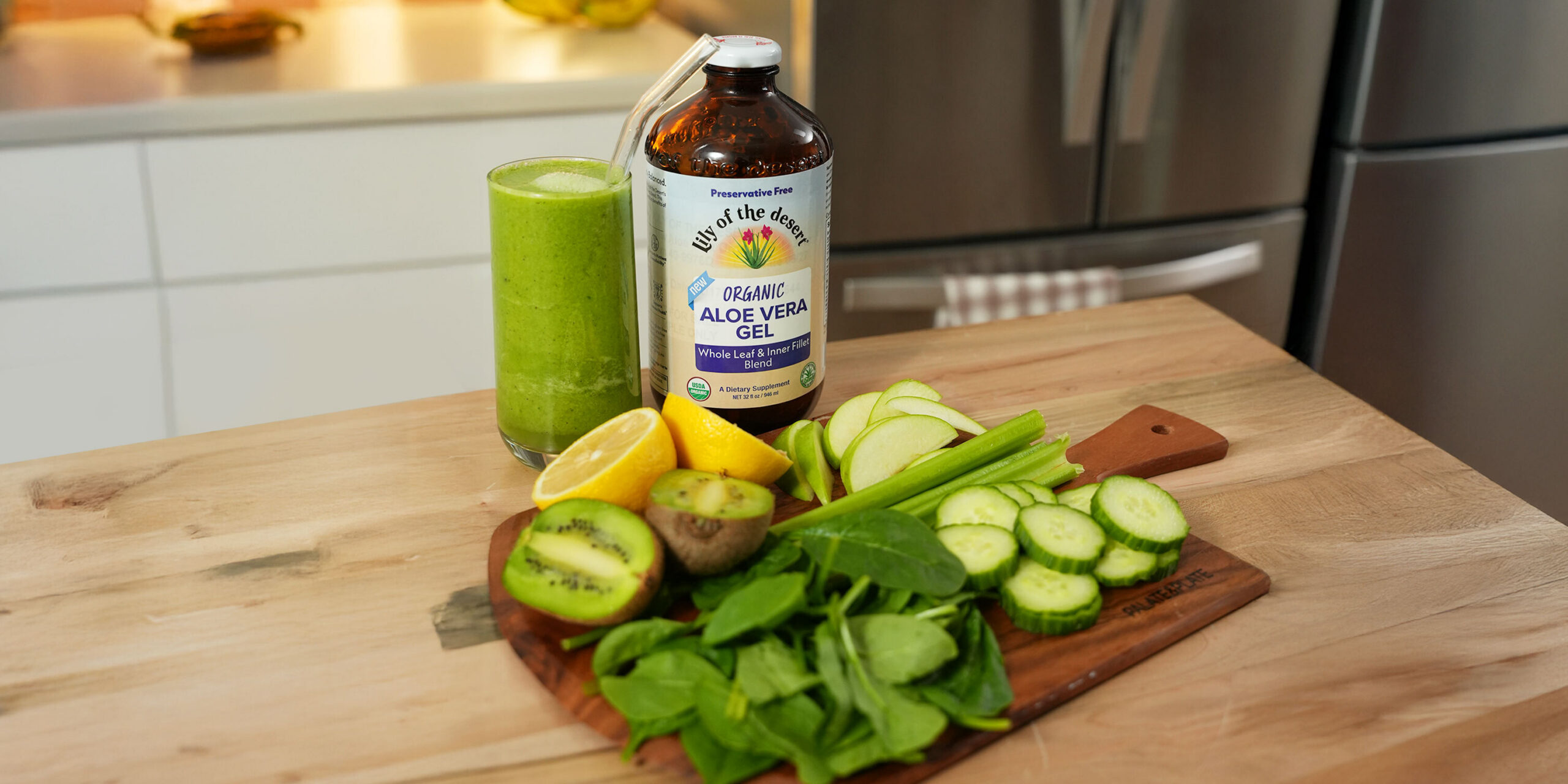
Aloe vera has a very mild, neutral taste, which means it blends seamlessly into smoothies without overpowering other ingredients. So, whether you’re making a fruit-forward blend, a greens-based smoothie, or something protein-packed, aloe works quite well in the mix of these. You still get the aloe health benefits without changing the flavor or texture of your favorite recipes.
Adding aloe vera gel to smoothies allows your body to absorb its nutrients naturally while supporting hydration and overall balance at the same time. It’s an easy way to make aloe part of your routine without having to think twice about it. And while smoothies are a popular option, some people prefer to drink aloe straight on its own. A common recommendation is anywhere from two to eight ounces per day, depending on your personal routine and preferences.
And if aloe vera hasn’t been part of your routine yet, let this blog be your sign to start. Aloe gel is an easy, everyday addition that supports your body without overcomplicating things, so why not soak up the benefits!
Disclaimer: These statements have not been evaluated by the Food and Drug Administration. This product is not intended to diagnose, treat, cure, or prevent any disease.